How much does a bathroom or kitchen renovation cost?
Whether you’re planning to transform your forever home or increase your property’s market appeal and value, understanding how much to invest and where is key to achieving the best outcome for your renovation.
While most homeowners wish there were a simple answer to the question, “How much does a home renovation cost?”, the truth is that costs vary widely depending on the scale and complexity of your project. The number of rooms, their sizes, the quality of materials, fixtures and fittings, required trades, and even ceiling heights all play a role in determining the total investment.
To help make sense of it all, we sat down with our very own Vanessa Cook, CEO and Design Manager at smarterBATHROOMS+, to explore what homeowners in Melbourne can expect to spend on a renovation and how to make the most of their budget.
Bathroom Renovations: Where do I start and what should I expect?
According to Vanessa, the bathroom remains one of the most popular and valuable rooms to renovate.
‘Your bathroom is one of the busiest areas in your home and can drastically boost its appeal, which is why you should plan to invest at least $45,000 in a bathroom project,’ says Vanessa. ‘That should be your base budget; however, for a larger-scale or luxury project, you can expect to spend $55,000 and above’
A bathroom renovation at the $45,000 mark typically includes with a professional renovating service:
💻 Professional design and planning
🛠️ Demolition of the existing space
🔧 Supply and installation of all new materials, custom cabinetry, fixtures, and fittings
👷 Required trades and full project management
Your final cost will depend on several factors such as size of the room, whether you’re changing the layout, moving walls, the amount of tiling, and the finishes you choose for your cabinetry and benchtops. Luxuries such as underfloor heating, double showers, or freestanding baths can also increase the overall investment.
Vanessa recommends using your home’s value as a guide:
‘A good rule of thumb is to invest between 5% and 10% of your home’s total value into your bathroom. It’s an investment that not only enhances your daily comfort but also adds significant resale value.’
Kitchen Renovations: The Heart of the Home
It’s no secret that the kitchen is the heart of every home , no longer just a place for cooking, it’s now a central hub for entertaining, working, and connecting.
‘We say it time and time again,” Vanessa explains. ‘The kitchen has become a true multi-purpose space. A small kitchen renovation might start at $40,000, but to create a stylish and functional kitchen that truly elevates your home, you should budget at least $50,000 or more’
A well-planned kitchen renovation at this level allows for:
🛠️ Demolition of the existing kitchen
🧰 New custom cabinetry, benchtops, and splashback installation
🗄️ Smarter storage solutions
💡 Updated lighting and flooring
🚽 Reconfigured plumbing and electrical layouts
👷 Project management and coordination of trades
Just like bathrooms, Vanessa recommends investing 5–10% of your home’s value into your kitchen.
‘When you invest at this level, you’re creating a kitchen that not only meets your lifestyle needs but also adds long-term value to your home,’ she says. ‘It’s a space that brings people together and enhances how you live.’
The Main Factors Influencing Renovation Costs
Renovation costs can vary significantly, even between quotes that look similar on the surface. Vanessa warns homeowners to be cautious about choosing the cheapest quote.
‘When comparing quotes, it’s crucial not to base your decision solely on price, she explains. ‘A lower quote may reflect a reduced level of service, building works, trades or hidden exclusions. We provide detailed quotations that clearly explain how much your project will cost and why.’
Here are the key factors that most influence your renovation budget:
1. Plumbing Plumbing costs increase when you move plumbing points from their original location or add extra features such as dual showers, freestanding baths, or additional sinks.
2. Cabinetry Cabinetry can quickly increase costs especially in kitchens if you include more drawers, custom cabinetry, or high-end finishes. However, this is also an area where you can adjust to suit your budget.
‘If you need to reduce costs, consider adjusting your cabinetry finishes rather than compromising the overall design,’ Vanessa suggests.
3. Tiling Tiling is one of the biggest cost drivers in bathrooms. The higher your wall tiling, the higher the price not only because of the material cost but also the labour involved.
‘You can start with full-height tiling as a benchmark,’ Vanessa advises, ‘then scale back if needed to meet your budget.’
4. Trades and Labour Labour plays a major role in determining your renovation costs. In bathrooms, 70% of the overall cost typically comes from the trades and labour required for demolition, waterproofing, plumbing, tiling, electrical and installation. The remaining 30% comes from materials and fittings.
In kitchens, it’s the opposite: around 30% of the cost goes to labour, while 70% goes into materials, appliances, and finishes.
‘Bathrooms are incredibly labour-intensive small rooms,’ Vanessa says. ‘That’s why the ratio flips compared to kitchens.’
Making smart investment decisions
Renovating your home is one of the most rewarding investments you can make but it’s essential to approach it strategically. Vanessa encourages homeowners to think beyond just the immediate spend and consider long-term value.
‘Quality workmanship and design longevity matter,’ she says. ‘A renovation done properly not only enhances your lifestyle but adds substantial value to your home. Cutting corners may save money in the short term but often leads to higher costs down the track.’
Working with an experienced design and build team ensures that every decision from layout to materials aligns with both your vision and budget.
Why professional project management matters
One of the most overlooked aspects of a renovation is project management and yet it’s one of the most critical.
‘Even the best design can fall apart without strong project management,’ Vanessa explains. ‘A professional project manager coordinates trades, monitors progress, and ensures every detail is completed to standard. It’s what turns a good renovation into a great one.’
‘Every renovator will benefit from a dedicated Project Manager, Interior Designer, and Detailer working together on their renovation. This team structure means that from concept to completion, every element is planned, executed, and quality-checked to ensure a stress-free experience. It truly is worth the investment.’
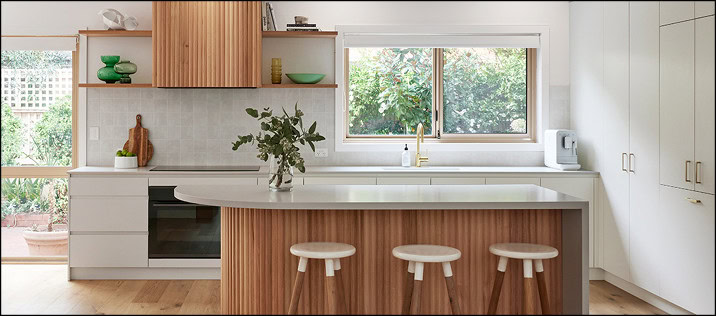
The benefits of renovating your whole home at once
If you’re planning to renovate multiple areas of your home, Vanessa strongly recommends doing it all at once rather than in stages.‘Quite simply, it’s quicker, more economical, and less stressful to undertake your renovation as one complete project,” she says. “When one company manages the design and build of your entire renovation, you get consistency across finishes, timelines, and communication.’ The benefits include:
Cost efficiency: Bundling work together reduces trade callouts, material deliveries, and administrative costs.
Design consistency: The same design team ensures a cohesive aesthetic across all spaces.
Reduced disruption: You only have to live through one period of construction instead of multiple smaller ones over months or even years.
Streamlined management: Having one dedicated team overseeing your renovation means fewer delays and a smoother process overall.
‘It’s also better for your sanity,’ Vanessa laughs. ‘Living through a renovation is never easy, but it’s much easier to manage one renovation period rather than many.’
Whether you’re upgrading your bathroom, transforming your kitchen, or undertaking a full home renovation, investing in quality design and craftsmanship will pay off for years to come. Vanessa’s final advice?
‘Invest in expert design, qualified trades, and professional project management. That’s the best way to achieve a renovation that’s beautiful, functional, and built to last.’
To explore how much your renovation could cost and how we can bring your vision to life book your free in-home consultation with our design team today.
Inspiration and advice
Inspiration and advice
As featured in